In industrial filtration systems, achieving high-purity fluid quality requires more than selecting the right filter media. The cartridge filter housing provides the structural support and sealing environment that determines filtration stability, flow performance, and contamination control.
Industrial cartridge filter housings are widely used in applications requiring precise filtration, including water treatment, pharmaceutical processing, food and beverage production, chemical manufacturing, and semiconductor-related processes. A properly designed housing ensures reliable operation by controlling pressure drop, preventing bypass leakage, and maximizing filter cartridge performance.
With increasing demands for cleaner processes and higher product quality, selecting the right cartridge filter housing solution has become an essential part of industrial filtration design.
A cartridge filter housing is designed to securely contain one or multiple filter cartridges while directing fluid flow through the filtration media.
Its primary functions include:
Supporting filter cartridges under operating pressure
Maintaining proper sealing between dirty and clean sides
Ensuring consistent fluid distribution
Protecting downstream equipment from contamination
Even when using high-performance filter cartridges, poor housing design can lead to:
Fluid bypass
Uneven filtration
Excessive pressure drop
Reduced filter service life
Therefore, cartridge filter housing design directly influences the reliability of the entire filtration system.
Material compatibility is one of the most important factors when selecting industrial cartridge filter housings.
The housing material must withstand operating conditions such as:
Chemical exposure
Temperature variations
Pressure fluctuations
Cleaning processes
Stainless steel 304 is commonly used for general industrial applications due to its balance of strength, corrosion resistance, and cost efficiency.
Typical applications include:
Water filtration
General process fluids
Industrial liquid purification
316L stainless steel provides improved corrosion resistance and is preferred for demanding environments.
Common applications include:
Pharmaceutical processing
Food and beverage production
Chemical filtration
High-purity water systems
For highly aggressive environments, materials such as duplex stainless steel, titanium, or nickel alloys may be se lected to improve corrosion resistance and service life.
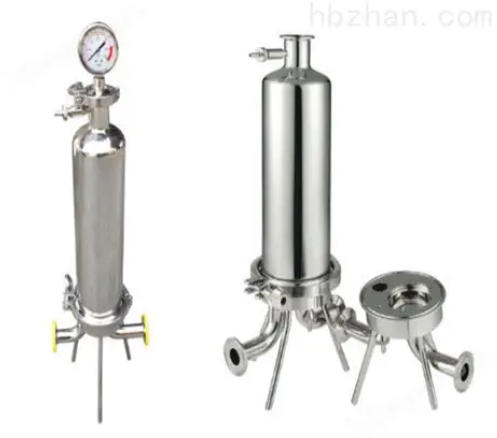
High-purity filtration requires stable flow conditions.
The internal design of a cartridge filter housing affects how evenly fluid passes through each cartridge.
Poor flow distribution can cause:
Uneven cartridge loading
Premature clogging
Reduced filtration efficiency
Increased maintenance frequency
A well-designed housing should optimize:
Inlet flow path
Cartridge arrangement
Internal clearance
Outlet configuration
Pressure drop is another important performance indicator.
As contaminants accumulate, resistance increases. Proper housing sizing helps maintain acceptable pressure loss while ensuring required filtration capacity.
Industrial cartridge filter housings are available in different configurations, including:
Single cartridge housings
Multi-cartridge housings
High-flow cartridge systems
The correct configuration depends on:
Required flow rate
Fluid characteristics
Contamination level
Available installation space
Multi-cartridge housings are often preferred for high-flow applications because they increase filtration area and reduce the loading rate on individual cartridges.
This improves:
Filter life
Flow stability
Maintenance intervals
For high-purity applications, preventing fluid bypass is critical.
A reliable cartridge filter housing should provide:
Accurate cartridge positioning
Secure sealing structure
High-quality gasket or O-ring design
Poor sealing may allow unfiltered fluid to bypass the cartridge, resulting in contamination of the clean process stream.
Applications such as pharmaceuticals, electronics manufacturing, and food processing require particularly strict sealing performance to maintain product quality.
Maintenance efficiency affects the long-term operating cost of cartridge filtration systems.
A practical industrial cartridge filter housing design should allow:
Easy cartridge replacement
Quick opening and closing
Simple internal inspection
Reduced maintenance downtime
Features such as:
Clamp closures
Swing bolts
Polished internal surfaces
Corrosion-resistant components
can improve operator efficiency and reduce maintenance complexity.
Cartridge filter housings are widely used in industries requiring reliable contamination control.
Applications include:
Drinking water purification
Reverse osmosis pretreatment
Industrial water filtration
Used for:
High-purity liquid filtration
Process protection
Sterile filtration systems
Common applications include:
Beverage clarification
Ingredient filtration
Product quality protection
Used for:
Chemical solution filtration
Process fluid purification
Equipment protection
High-purity cartridge filtration helps control microscopic contaminants in critical processes.
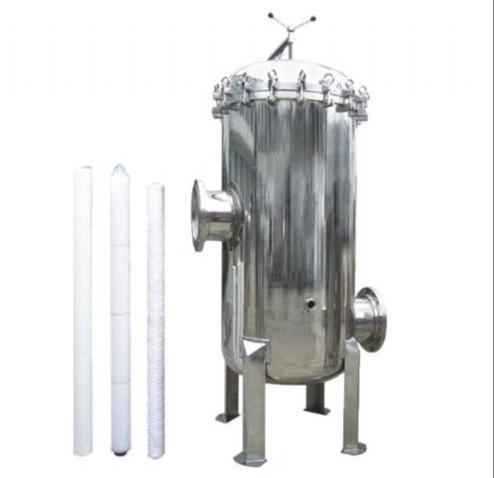
Selecting the right housing requires evaluating several engineering factors:
The housing must provide sufficient capacity without excessive pressure loss.
The housing should match the required cartridge micron rating.
Temperature, pressure, and chemical compatibility must be considered.
The design should support efficient cartridge replacement and inspection.
The housing material must match the process fluid to ensure long-term reliability.
A cartridge filter housing supports filter cartridges and ensures that fluid passes through the filtration media without bypass leakage.
Stainless steel 316L is commonly se lected for high-purity and corrosive applications, while 304 stainless steel is suitable for general industrial use.
Housing design influences flow distribution, pressure drop, sealing reliability, and cartridge service life.
They are widely used in water treatment, pharmaceutical, chemical, food processing, and high-purity industrial applications.
Industrial Cartridge Filter Housing Solutions are essential for achieving reliable high-purity filtration performance. The right housing design improves flow stability, prevents contamination bypass, extends cartridge life, and reduces long-term maintenance costs.
By considering material selection, flow distribution, sealing performance, cartridge configuration, and operating conditions, industries can build filtration systems that deliver consistent quality and long-term operational reliability.