What Are Johnson Wedge Wire Screens?
Johnson wedge wire screens are manufactured by welding V-shaped profile wires onto a series of support rods, creating continuous and precise slot openings. This design allows liquids or water to flow smoothly through the screen while effectively retaining solid particles and impurities.
Compared with traditional perforated filters or woven mesh materials, wedge wire screens provide higher mechanical strength, more accurate filtration performance, and a longer operational lifespan. The unique V-shaped wire structure also helps reduce clogging because the slots widen inwardly, allowing trapped particles to be released more easily during cleaning. As a result, Johnson wedge wire screens can be reused multiple times and require less maintenance over time.
Main Applications of Johnson Wedge Wire Screens
Oil and Gas Industry
Johnson wedge wire screens are widely used in oil wells, gas wells, and water wells for sand control systems. Their durable structure helps prevent formation sand from entering the production system, protecting both under ground equipment and surface processing facilities. The screens can withstand high pressure and harsh operating environments commonly found in drilling applications.
Water Treatment and Environmental Protection
In water treatment systems, wedge wire screens are commonly applied in raw water intake filtration, industrial wastewater treatment, seawater desalination, and ion exchange systems. They are also used for retaining filter media such as activated carbon and resin during purification processes. Their corrosion resistance and non-clogging performance make them suitable for long-term use in demanding environments.
Mining and Metallurgical Processing
Mining operations use wedge wire screens for ore classification, dewatering, and desludging processes. In coal preparation plants, the screens help separate particles accurately while handling heavy material loads and abrasive conditions. Their high mechanical strength improves durability and reduces wear during continuous operation.
Food and Beverage Industry
Food-grade stainless steel wedge wire screens are commonly used in breweries, sugar processing plants, starch production facilities, and other food manufacturing systems. In brewing applications, they are often installed in filter tanks to separate solids from liquids efficiently. The hygienic surface design and high open area meet strict sanitary requirements while supporting efficient processing.
Emerging Industrial Applications
As filtration technologies continue to develop, Johnson wedge wire screens are finding new applications in advanced industries such as biopharmaceutical production, lithium battery material processing, and fine chemical filtration. Their customizable structure and reliable filtration performance provide strong potential for future industrial use.
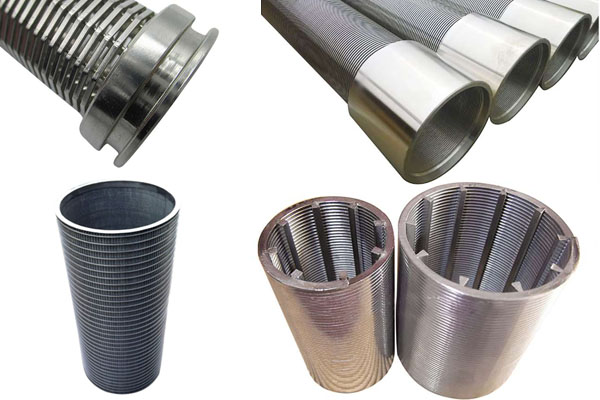
Edge type of wedge wire screen filter pipe:
1) Standard type: There is no edge on the wedge wire filter pipe.
2)End ring type. The end rings are welded onto the wedge wire screen cylinder.
3)Flange type. The flange is welded onto the wedge wire screen cylinder and there are two types of flange for your choice.
4)Threaded fitting type.
 FAQ About Johnson Wedge Wire Screens
1. How do I choose the right slot size for my application?
The ideal slot size depends on the particle size, flow rate, and filtration accuracy required in your system. Fine filtration applications usually require smaller slots, while high-flow systems often use larger openings. Providing sample material data or operating conditions can help manufacturers recommend the correct specification.
2. Can Johnson wedge wire screens handle high-pressure environments?
Yes. Wedge wire screens are designed with strong welded construction and support rods, allowing them to perform reliably under high pressure and heavy-load conditions. They are commonly used in oil wells, mining systems, and industrial filtration equipment where durability is essential.
3. What materials are available for wedge wire screens?
The most common materials include stainless steel 304, 316, and 316L. Depending on the application, special alloys such as Duplex stainless steel or Hastelloy can also be used for improved corrosion resistance and chemical compatibility.
4. How are wedge wire screens cleaned and maintained?
Most wedge wire screens can be cleaned using backwashing, high-pressure water cleaning, or chemical cleaning methods. Their smooth surface and V-shaped slot structure reduce particle buildup, making maintenance easier and extending service life.
5. Can wedge wire screen filter pipes be customized?
Yes. Manufacturers can customize diameter, slot opening, length, connection type, edge design, and material based on project requirements. Custom fabrication helps ensure better filtration performance and easier integration into existing systems.