Industrial filtration systems are expected to operate continuously while maintaining stable flow rates and protecting downstream equipment. However, traditional filtration methods often require frequent shutdowns for manual cleaning or filter replacement, increasing labor costs and production interruptions.
This is why self cleaning filters have become increasingly popular across water treatment, chemical processing, power generation, and manufacturing industries. By automatically removing accumulated contaminants, self cleaning filters improve operational efficiency, reduce maintenance requirements, and deliver significant long-term cost savings.
A self cleaning filter is an automatic filtration device designed to remove suspended solids from liquids without stopping the filtration process.
Unlike conventional strainers or cartridge filters that require manual cleaning, self cleaning filters continuously monitor contamination levels and initiate a cleaning cycle when necessary.
A typical self cleaning filter system consists of:
Filter housing
Filter element or screen
Differential pressure controller
Cleaning mechanism
Drain or discharge system
Control unit
The primary objective is to maintain stable filtration performance while minimizing operator intervention.
Although designs vary, most self cleaning filters operate using the following sequence:
Fluid flows through the filter element, and suspended particles are retained on the screen surface.
As contaminants accumulate, pressure loss across the filter gradually increases.
When the pressure differential reaches a preset value, the cleaning cycle begins automatically.
The cleaning mechanism removes accumulated solids from the filter screen.
Common cleaning methods include:
Suction scanning
Brush cleaning
Scraper cleaning
Backwashing
Collected solids are discharged through the drain outlet while filtration continues.
The entire cleaning process typically occurs without interrupting production.
In industrial plants, unplanned shutdowns and maintenance activities often create substantial operating costs.
Automated cleaning technology addresses these challenges by reducing human intervention and maintaining consistent filtration performance.
Manual cleaning requires:
Labor resources
Equipment shutdown
Replacement parts
Production delays
Self cleaning filters automatically remove contaminants and significantly reduce maintenance frequency.
Benefits include:
Lower labor expenses
Reduced maintenance time
Less operator involvement
Lower overall operating costs
Many industrial processes operate continuously and cannot afford frequent filtration interruptions.
Examples include:
Cooling water systems
Petrochemical plants
Power stations
Industrial water treatment facilities
Self cleaning filters allow filtration and cleaning to occur simultaneously, enabling:
Stable production
Improved equipment utilization
Reduced downtime
Higher process efficiency
As contaminants accumulate in conventional filters, pressure loss increases and pumps consume more energy.
Automated cleaning keeps the filter element cleaner and maintains lower differential pressure.
This results in:
Reduced pump energy consumption
Improved hydraulic efficiency
Stable system performance
Lower operating expenses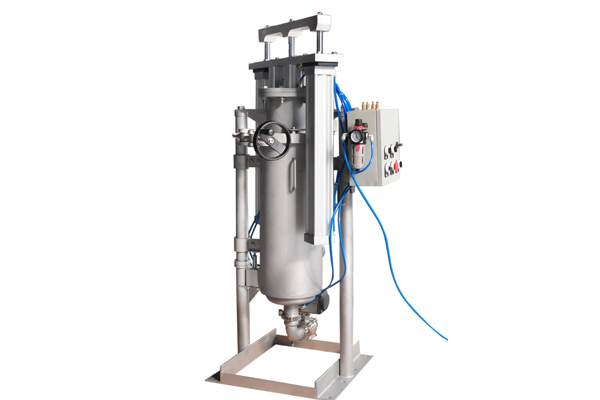
Suspended solids can damage critical equipment such as:
Pumps
Heat exchangers
Spray nozzles
Membrane systems
Valves
A self cleaning filter continuously removes contaminants and provides reliable protection for downstream equipment.
This can significantly reduce:
Equipment wear
Maintenance costs
Unplanned shutdowns
Traditional backwash systems may require significant quantities of cleaning water.
Modern self cleaning filters optimize the cleaning process and minimize water usage.
Advantages include:
Lower water consumption
Reduced wastewater generation
Improved environmental performance
Lower utility costs
Stable filtration performance is essential for process control.
Because self cleaning filters maintain a cleaner filter element, they provide:
Consistent flow rates
Stable pressure conditions
Reliable filtration efficiency
Longer operating cycles
This reliability is especially valuable in automated industrial facilities.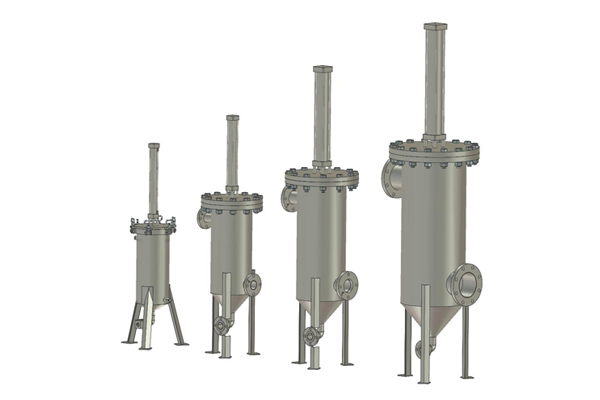
Suitable for applications containing soft contaminants and moderate solid loading.
Use suction nozzles to remove particles from the screen surface and are widely used in water treatment systems.
Ideal for viscous fluids and applications with high contamination levels.
Use re verse flow to clean the filter element and are commonly used in large industrial systems.
Self cleaning filters are widely used in:
Industrial water treatment
Cooling water systems
Petrochemical processing
Food and beverage industries
Steel manufacturing
Irrigation systems
Desalination plants
Pulp and paper processing
Their ability to provide continuous filtration and automatic cleaning makes them suitable for demanding operating environments.
When choosing a self cleaning filter, engineers should evaluate:
Determine maximum and normal operating flow.
Select the appropriate micron rating based on process requirements.
Particle size, concentration, and hardness affect cleaning performance.
Ensure compatibility with process conditions.
Common materials include:
Carbon Steel
SS304
SS316L
Duplex Stainless Steel
The primary advantage is continuous filtration without frequent manual cleaning or process shutdown.
It lowers labor requirements, reduces downtime, minimizes maintenance, and improves energy efficiency.
Yes. Certain designs, such as scraper and backwash filters, perform well in high contamination environments.
In many coarse and medium filtration applications, self cleaning filters can significantly reduce or even eliminate the need for disposable filter cartridges.
Self cleaning filters have become an essential solution for industries seeking higher reliability and lower operating costs. Their ability to automatically remove contaminants while maintaining continuous filtration offers significant advantages over traditional filtration methods.
By reducing maintenance requirements, lowering energy consumption, protecting downstream equipment, and improving operational efficiency, automated cleaning systems deliver substantial lifecycle value.
For modern industrial filtration systems, investing in a properly engineered self cleaning filter is not merely a maintenance improvement—it is a strategic step toward more efficient, reliable, and sustainable operation.